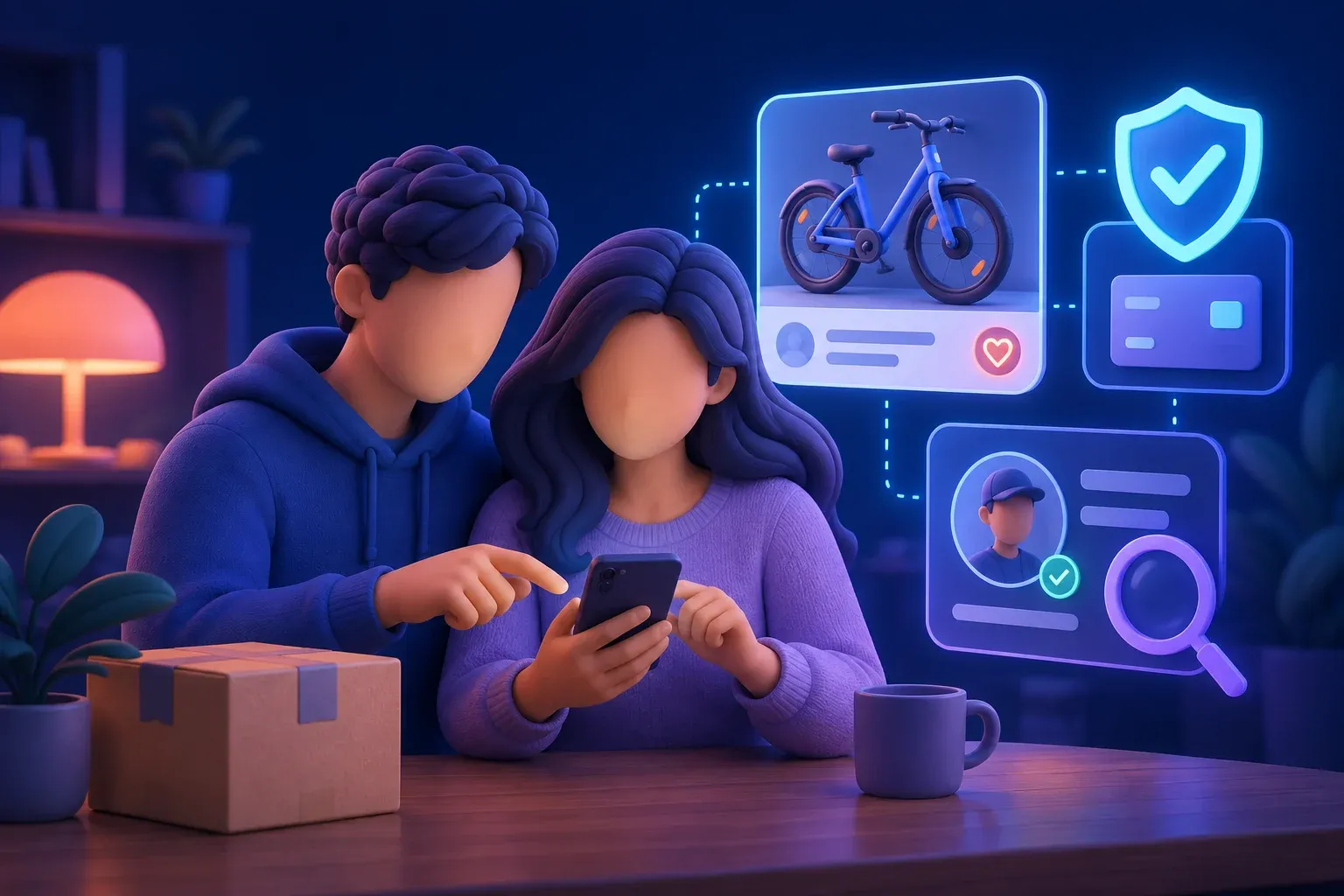
Online marketplaces are useful for finding a secondhand bike, replacing a phone or selling furniture your family no longer needs. Unfortunately, scammers can pretend to be either the buyer or the seller.
A convincing profile and a friendly conversation are not enough to prove somebody is genuine. A few simple checks can help you avoid turning a bargain into an expensive mistake.
A bargain should not require a rushed decision
Be cautious when an item is much cheaper than similar listings, especially if the seller wants a deposit immediately. Pressure about another buyer or an offer expiring soon should give you a reason to pause, not hurry.
Check the profile history and ask questions about the item. For expensive purchases, inspect it before paying. Photographs alone do not prove that the person has the item or that it is in the condition described.
Keep conversations inside the marketplace so you have a record. Be wary if somebody immediately moves you to another app or sends an unfamiliar payment link.
A screenshot is not proof of payment
When selling, check your own banking or payment account directly. Do not hand over an item because a buyer shows you a screenshot, receipt or email saying they have paid.
If the money has not arrived, wait and contact your bank or payment provider through its official app or website. There can be legitimate payment delays, but a stranger’s urgency does not change what you can verify.
For marketplaces that manage payments themselves, follow their official instructions rather than directions sent by the buyer.
You should not pay to receive a PayID payment
A common trick involves a fake message claiming you must upgrade to a business account or pay a fee before receiving money through PayID.
PayID does not require that upgrade. Never send money first to unlock a payment. Be equally cautious if somebody claims they overpaid and asks you to refund the difference. Check with your bank before doing anything.
The eSafety Be Connected PayID guide explains these warning signs. PayID is managed through your bank, not through links a buyer sends you.
Choose the payment method carefully
Use the marketplace’s recommended payment process and read its protection rules. Do not assume every transaction is covered simply because a familiar payment service is involved.
For example, protection can depend on the type of payment, the item and whether the transaction stays inside the platform. Direct bank transfers may be harder to recover if something goes wrong.
When paying by PayID or bank transfer, check that the displayed recipient name matches the person you expect. If it does not, stop. A matching name is only one check, not a guarantee that a listing is genuine.
Make collection safer too
Where practical, meet in a busy public place during daylight and take somebody with you. If a large item must be collected from a home, arrange for another adult to be present and avoid sharing unnecessary personal information.
Do not send identity documents, passwords or verification codes to a buyer or seller. If a teenager is buying or selling something, help them review the listing and arrange collection rather than letting them meet a stranger alone.
If something goes wrong, act quickly
Contact your bank or payment provider immediately if you sent money or exposed financial details. Save the listing, messages, account details and receipts, then report the account to the marketplace.
You can also report the scam to Scamwatch. If you entered a password through a suspicious link, change it through the genuine service and review the account’s security settings.
There is no shame in asking for help. Scams are designed to look believable. Taking a moment to check the person, the item and the payment is always worth more than rushing to secure a deal.